
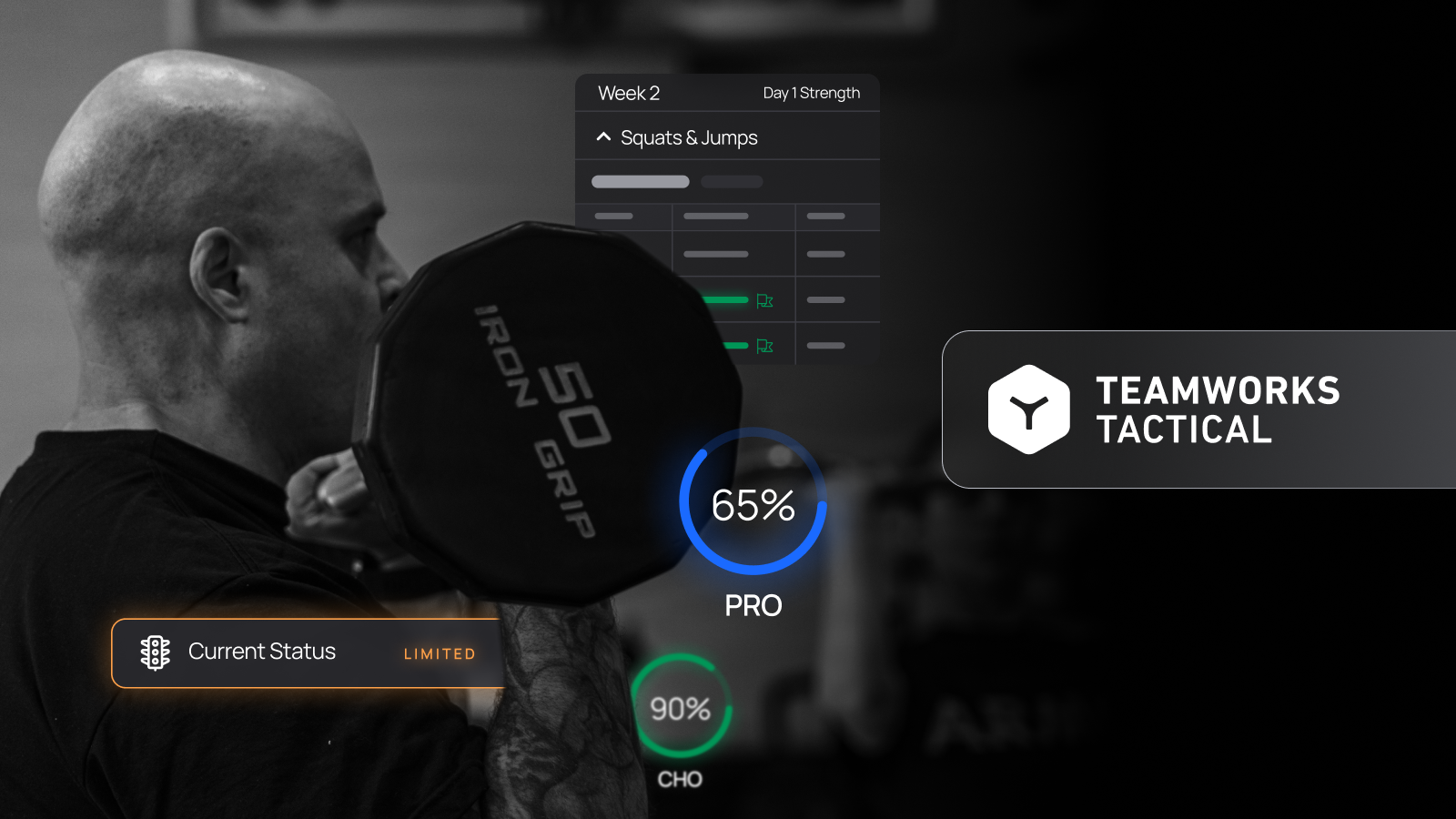
It’s no secret that military readiness, fitness, and human performance are vastly different terms in concept and application. Traditional readiness reporting focuses on minimum organizational standards, including fitness. Human performance is a daily, multi-disciplinary effort to prepare for mission essential tasks and unknown challenges. Readiness reporting does not equal execution under pressure.
The following 5 realities are how readiness is understood across the force.
1. Fitness supports readiness; it doesn’t define it.
“Fitness” typically describes the established baseline physical requirements. Challenges to readiness stem from factors beyond fitness metrics: capacity (physical and mental), skilled task execution, and recovery (metabolic, neurological, and structural). Human performance focuses on execution under sustained operational pressure, not just preparation or reported minimums.
2. Readiness is continuous.
Being prepared (a.k.a., “ready”) isn’t accomplished at a single point in time – it develops and builds over weeks and months. Passing tests doesn’t guarantee sustained performance as fatigue, stress, and injuries accumulate. Readiness standards confirm status at a moment in time; human performance is what happens between each of those moments.
3. Performance breaks down over time.
Readiness failures rarely happen dramatically; they erode quietly while cumulative workloads delay recovery. Minor injuries linger and focus slips, not from lack of effort but from cumulative load carried across training cycles, deployments, and assignments. Performance failure isn’t a fitness issue, it’s a lifecycle issue.
4. Readiness is a systems challenge.
Effective teams treat human performance as an integrated system by aligning training, recovery, and stress management, instead of addressing them in isolation. Within an organization, this systems-based approach only matters if the inputs are visible for the leaders taking action. Otherwise, these performance-enabling opportunities become stagnant checklists.
5. Readiness is role-specific.
Pilots, cyber specialists, and direct-action units face fundamentally different performance demands. Effective assessments align with functional area demands, not just what’s easiest to measure. The deeper issue of readiness is that real risk comes from using standardized signals to represent fundamentally different performance demands.
The competitive advantage in 2026 will belong to forces that build systems enabling performance to be observed, developed, and actioned precisely before it matters most.